The Australian higher education landscape has reached a definitive tipping point. In 2026, the “digital-first” campus is no longer a futuristic concept but a functional reality for over 1.6 million students enrolled across the country. As the Tertiary Education Quality and Standards Agency (TEQSA) continues to refine its frameworks for the age of Artificial Intelligence, the focus has shifted from mere technology adoption to the mastery of digital ecosystems.
For the modern student at institutions like the University of Sydney or Monash, success is increasingly defined by how effectively one can navigate these complex digital terrains. The integration of high-level analytics and Generative AI (GenAI) into the curriculum means that the “Standard Student” of 2026 must be as proficient in prompt engineering as they are in academic writing. However, with this digital surge comes an unprecedented increase in cognitive load. To maintain high distinctions, many students now seek professional support; for instance, you can find a reliable assignment writing services to bridge the gap between complex digital requirements and traditional academic rigor.
The 2026 Tech Stack: Essential Tools for the Modern Aussie Student
The current academic year has seen a consolidation of tools that prioritize “authentic demonstration of capability,” as encouraged by the latest TEQSA reform papers.
- AI-Enhanced Learning Management Systems (LMS): Platforms like Canvas and Moodle have evolved. They now feature “pedagogical nudges”—AI agents that analyze a student’s progress in real-time and suggest specific modules to strengthen weak areas.
- Immersive Simulation Labs: For nursing, engineering, and architecture students, VR/AR “digital twins” of Australian hospitals and construction sites have become mandatory components of coursework, replacing high-stakes physical exams with continuous competency tracking.
- Unified Collaboration Hubs: Microsoft Teams and Slack are now deeply integrated with university databases, allowing for seamless transition between lecture streaming and group project management.
Despite these advancements, the pressure to perform remains immense. Many students find that while technology makes resources accessible, it also accelerates the pace of the semester. When the workload becomes overwhelming, students often search for experts who can “pay for someone to do my assignment” to ensure they meet the stringent marking rubrics of Australian universities while staying on top of their digital literacy goals.
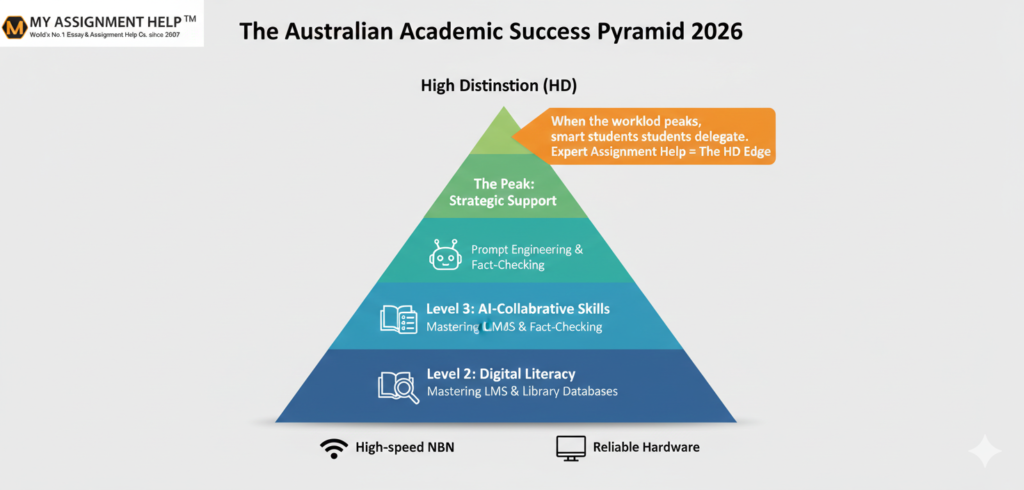
Data-Driven Success: Why Digital Literacy is the New GPA
According to the OECD Digital Education Outlook 2026, there is a clear correlation between “intentional pedagogical use” of AI and sustained learning gains. In Australia, the Department of Education’s 2026 Digital Projects Report highlights an investment of $0.4 billion across 11 major projects aimed at enhancing data quality and service delivery in higher education.
| Metric | 2024 Statistic | 2026 Projection/Data |
| Onshore Overseas Students | 481,851 | ~520,000+ |
| AI Integration in Curriculum | 24% (Primary/Secondary) | >65% (Higher Ed) |
| Digital Literacy Proficiency | 46% (Year 10 baseline) | 60% (Targeted Growth) |
| Government Investment | $0.3B (Education Projects) | $0.4B+ |
Sources: Australian Government Major Digital Projects Report 2026, OECD Digital Education Outlook.
Strategies for Staying Ahead in the Digital Campus
To succeed in this environment, Australian students must adopt a “Pro-Active” rather than a “Reactive” tech strategy.
- Audit Your Digital Footprint: Use discovery profiles (like those implemented at UTS) to connect with research networks and potential industry collaborators early.
- Master Collaborative AI: Shift from using AI as a “shortcut” to using it as a “tutor.” TEQSA’s 2026 guidelines emphasize that while AI can assist in drafting, the final submission must reflect individual critical thought.
- Mental Health vs. Screen Time: Recent research suggests that high screen time in senior students is linked to elevated stress. Successful students in 2026 are those who set hard boundaries for “offline” deep-work sessions.
Key Takeaways for 2026 Students
- Digital Integration: Success depends on mastering the university’s specific digital ecosystem, not just isolated apps.
- Academic Integrity: TEQSA’s focus is on “authentic assessment,” making it vital to use support services ethically for learning and guidance.
- Balance is Key: With the rising cost of living and academic pressure, delegating tasks through professional academic services is a common strategy for maintaining mental well-being.
See also: The Role Of Educational Speakers In Modern Learning Environments
FAQ: Navigating Higher Ed in Australia
Q1: Is it considered academic misconduct to use AI in 2026?
A: It depends on the university’s specific policy. Most Australian institutions now allow AI as a “preparatory tool” but require full disclosure and evidence of original critical analysis.
Q2: How can international students manage the digital transition?
A: Most universities offer “Digital Coaching” programs. Leveraging these alongside specialized academic support services helps bridge the gap between different global education standards.
Q3: What are the most in-demand digital skills for Aussie graduates?
A: Data analytics, cybersecurity awareness, and the ability to collaborate in hybrid/digital-only environments are currently the top priorities for Australian employers.
Author Bio
Lachlan McKenzie is a Senior Academic Consultant at MyAssignmentHelp. With over 10 years of experience in the Australian higher education sector, Lachlan specializes in helping students navigate the complexities of TEQSA compliance and digital curriculum shifts. He has authored numerous guides on academic integrity and the ethical use of technology in student life.